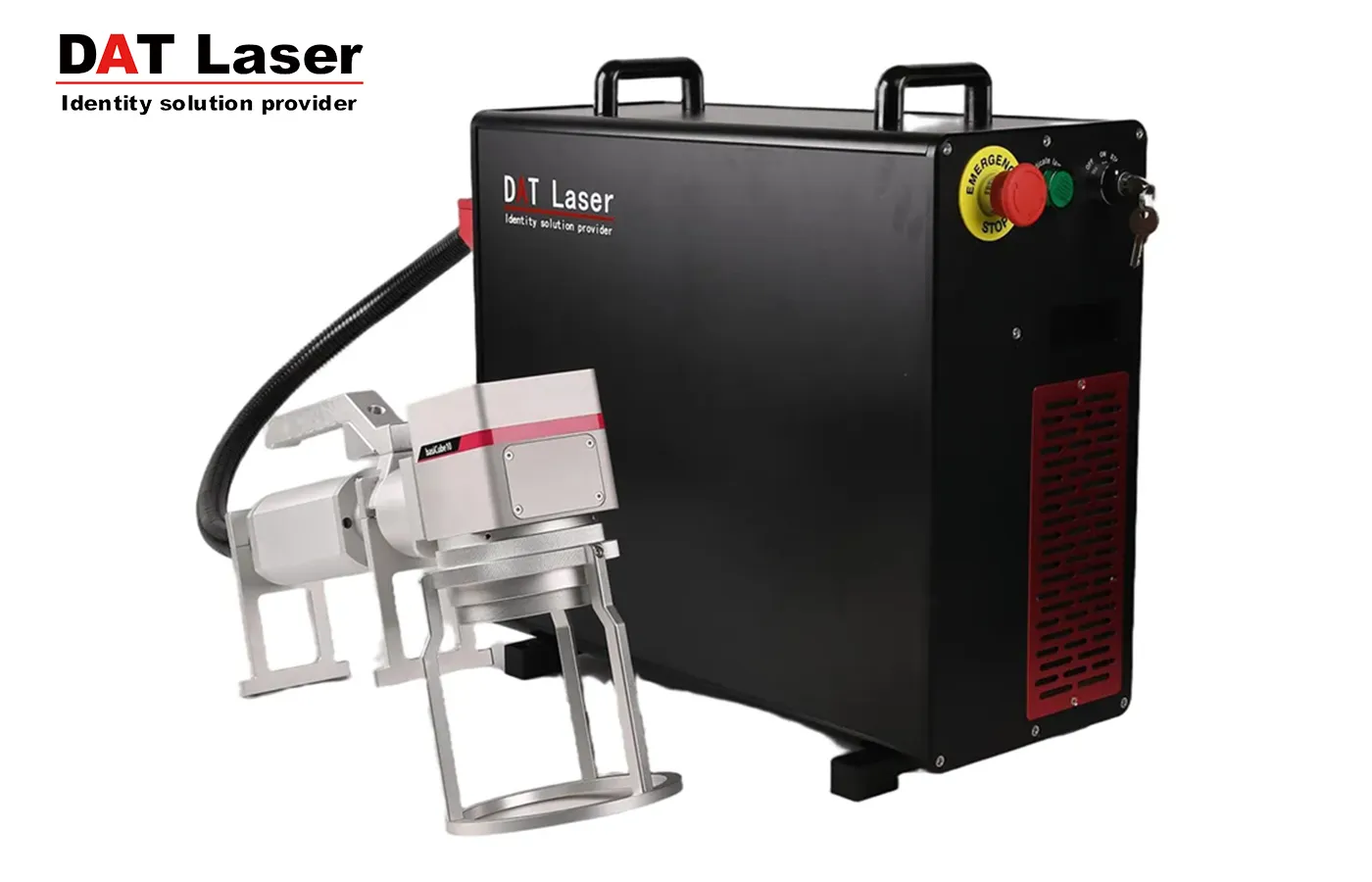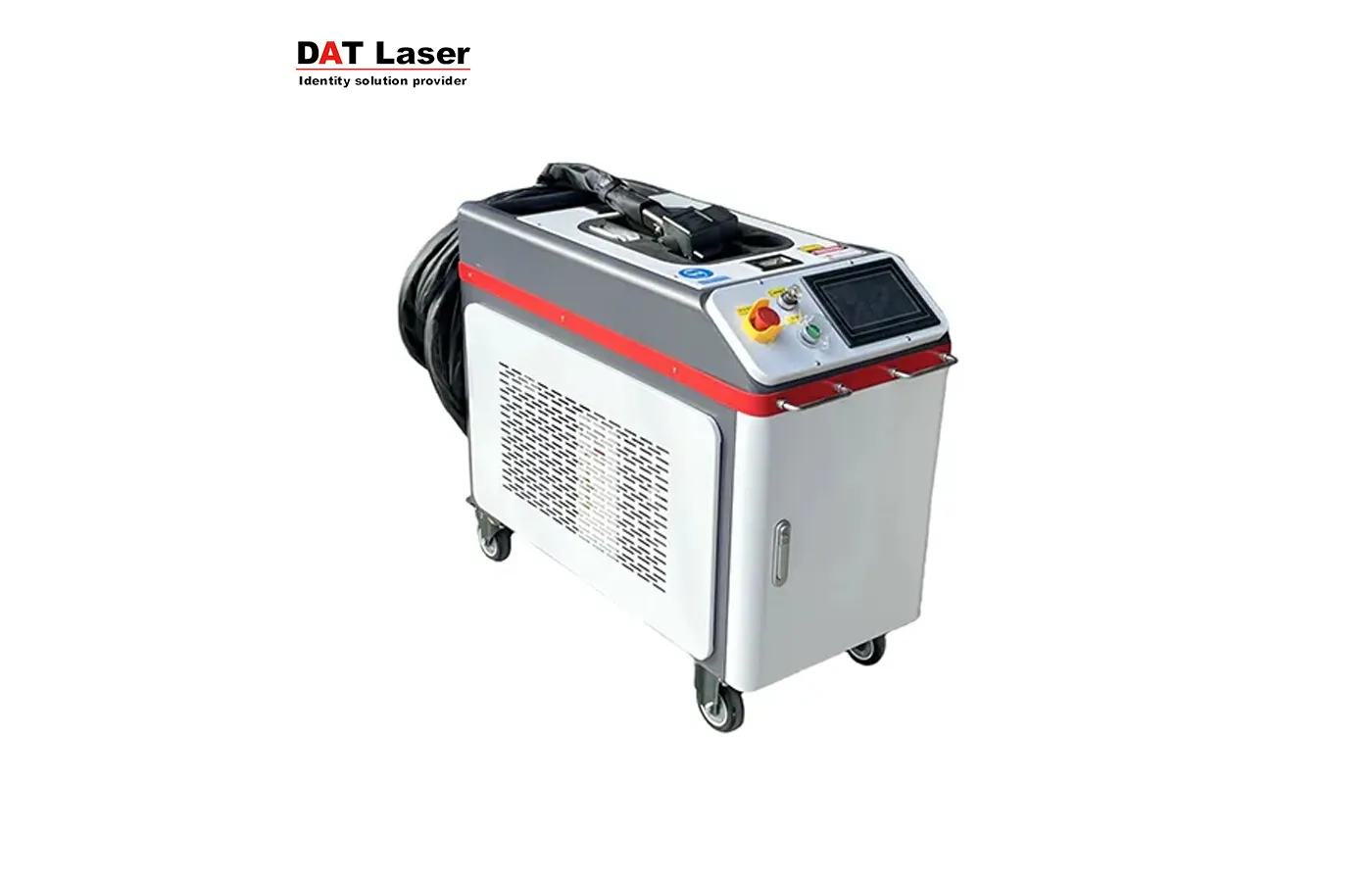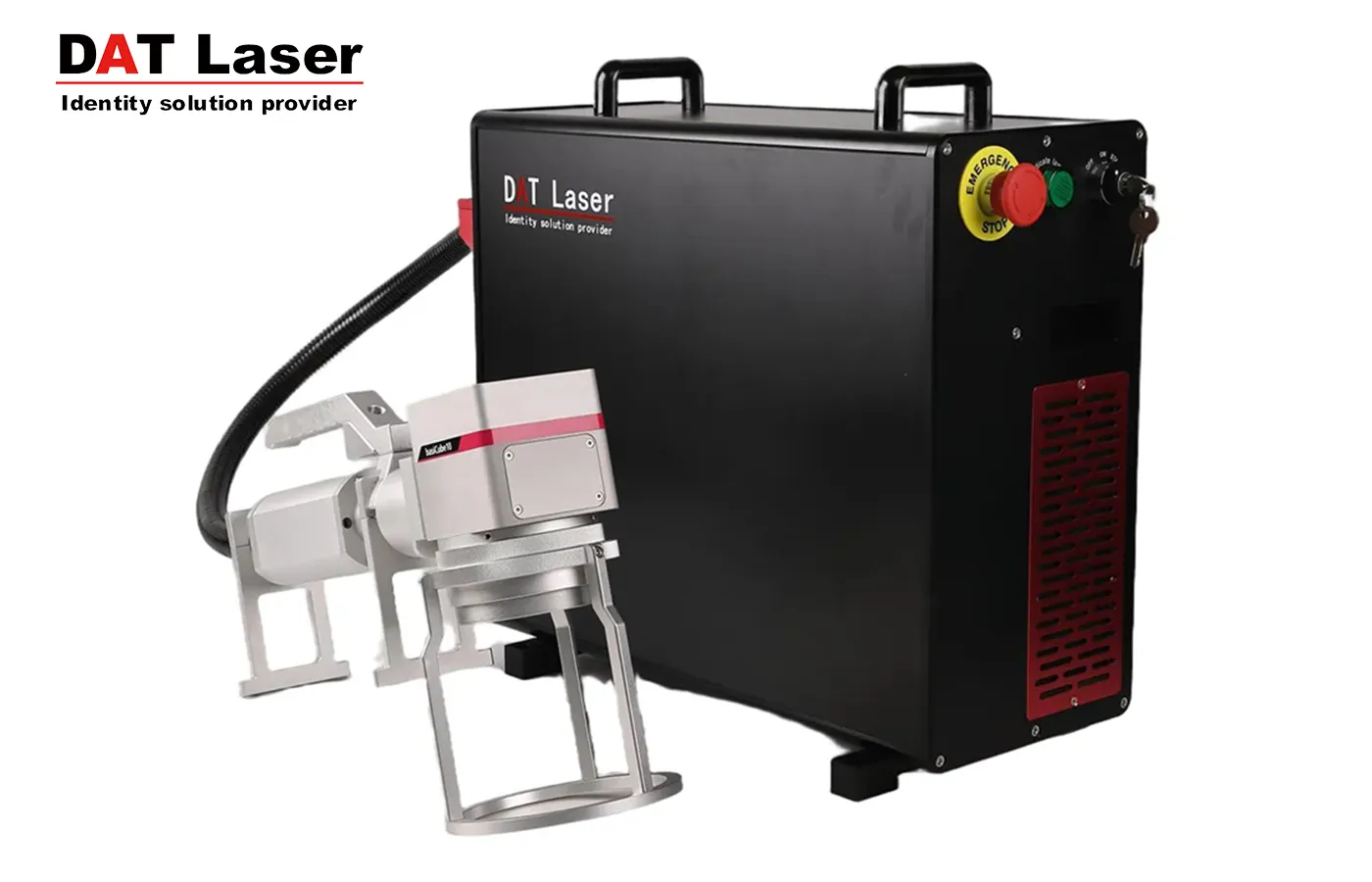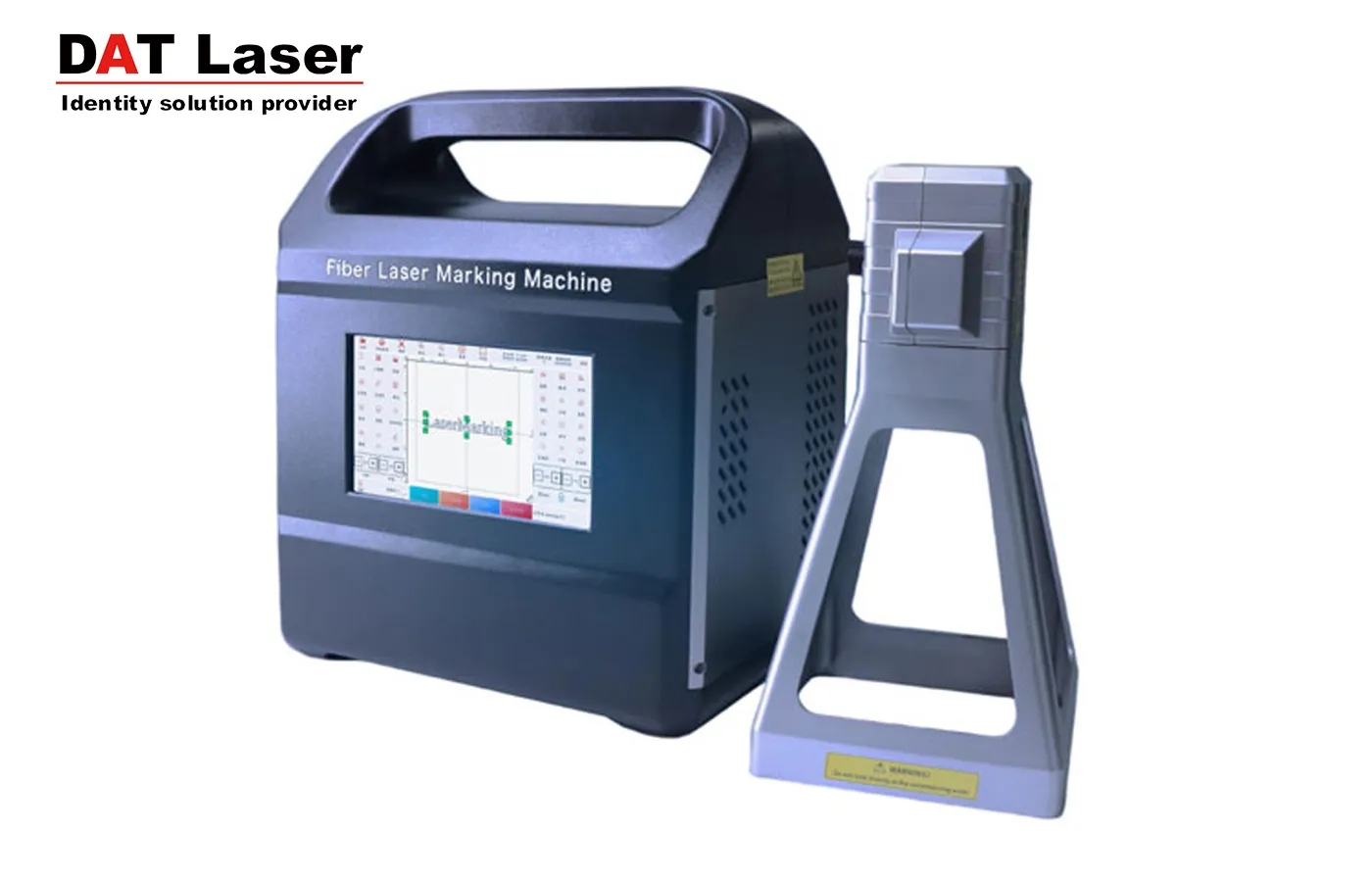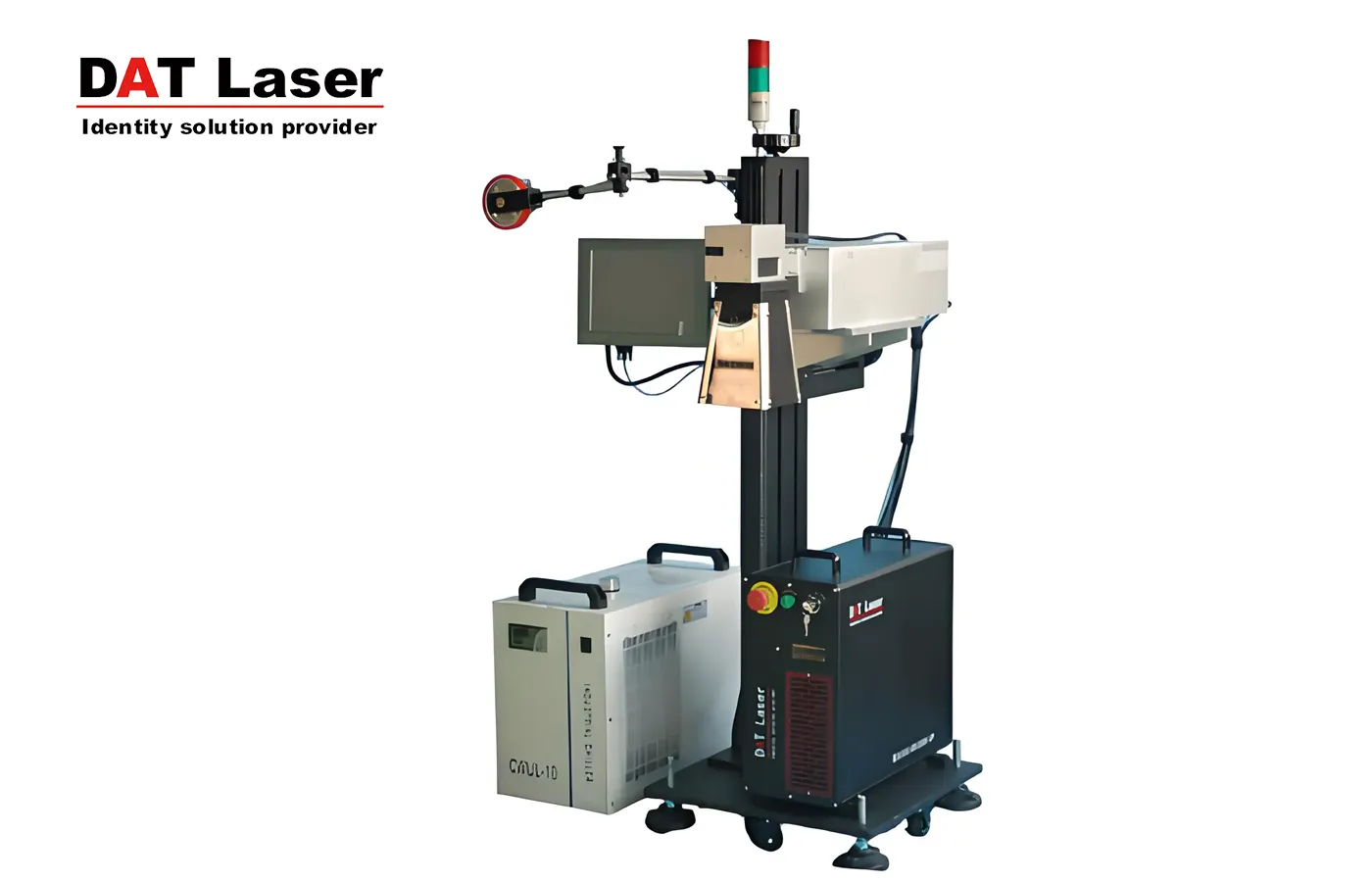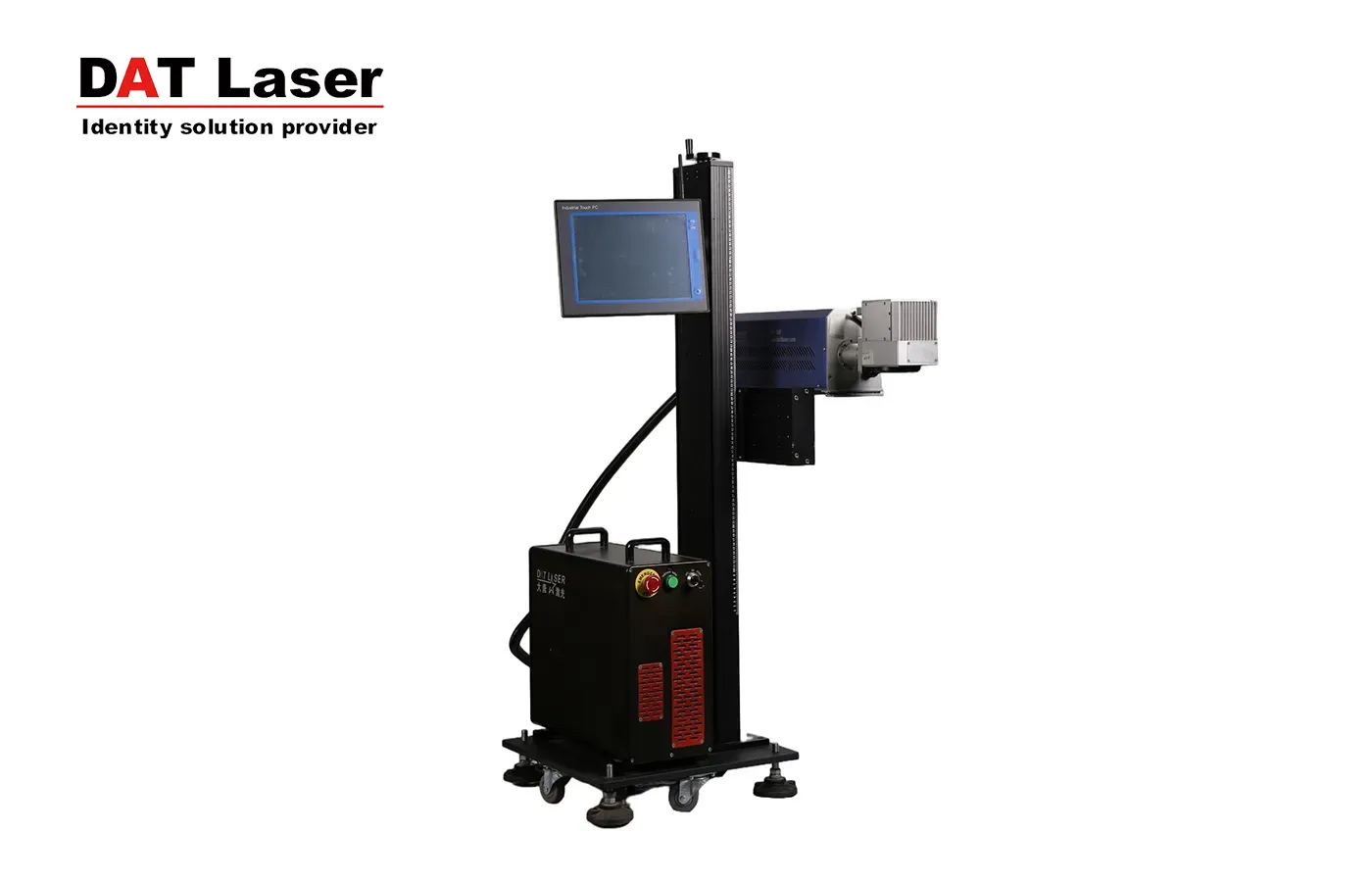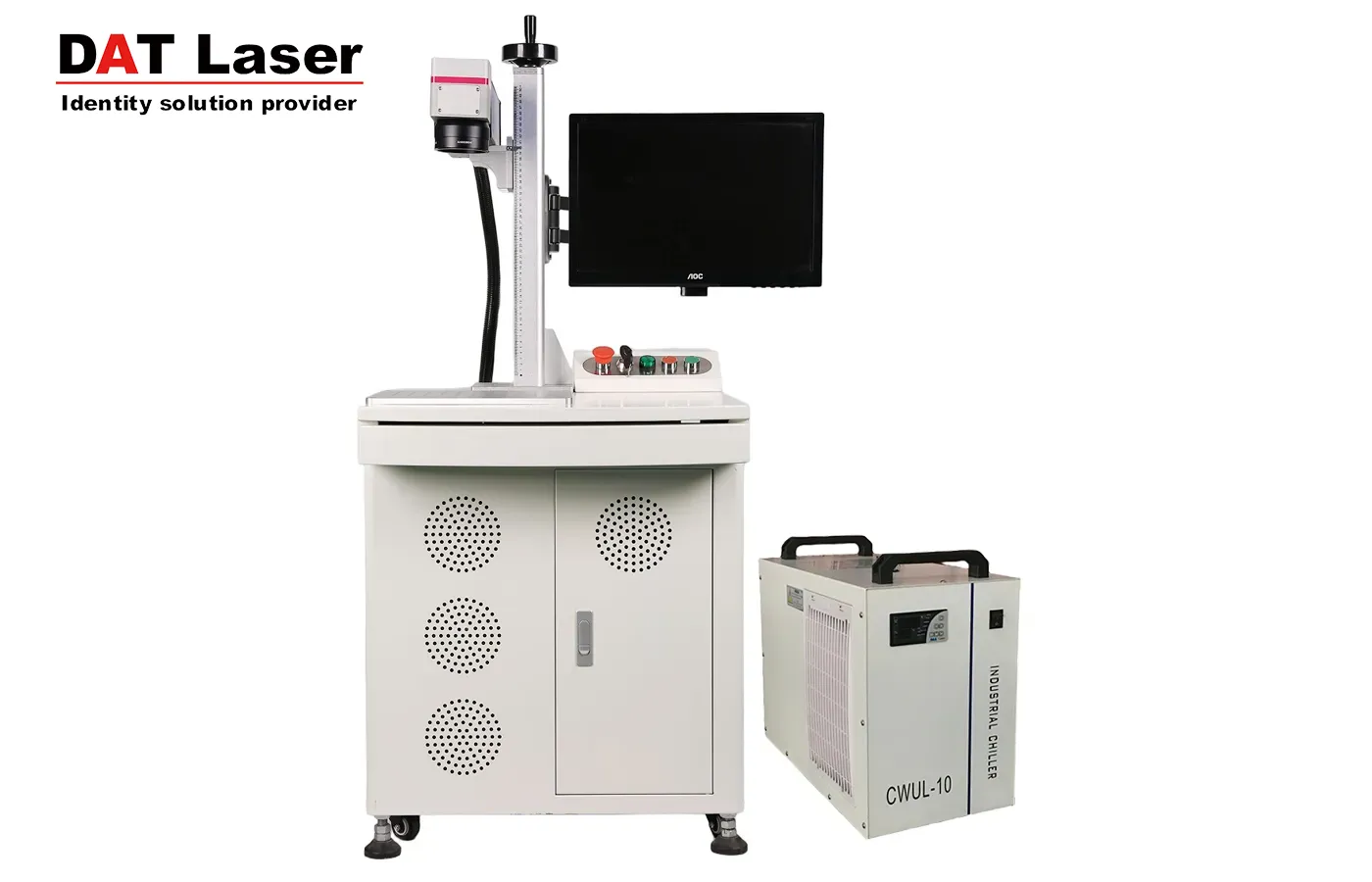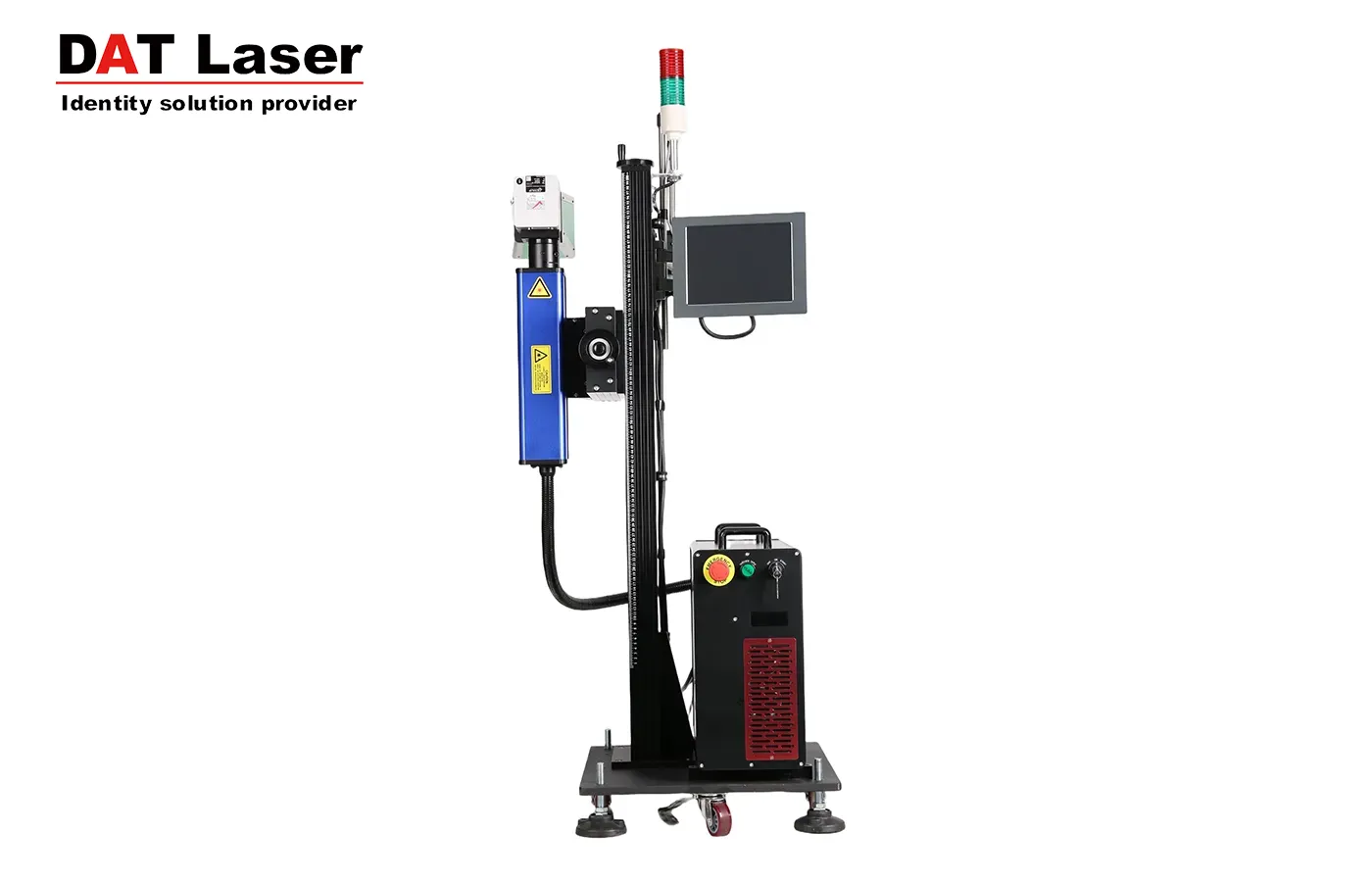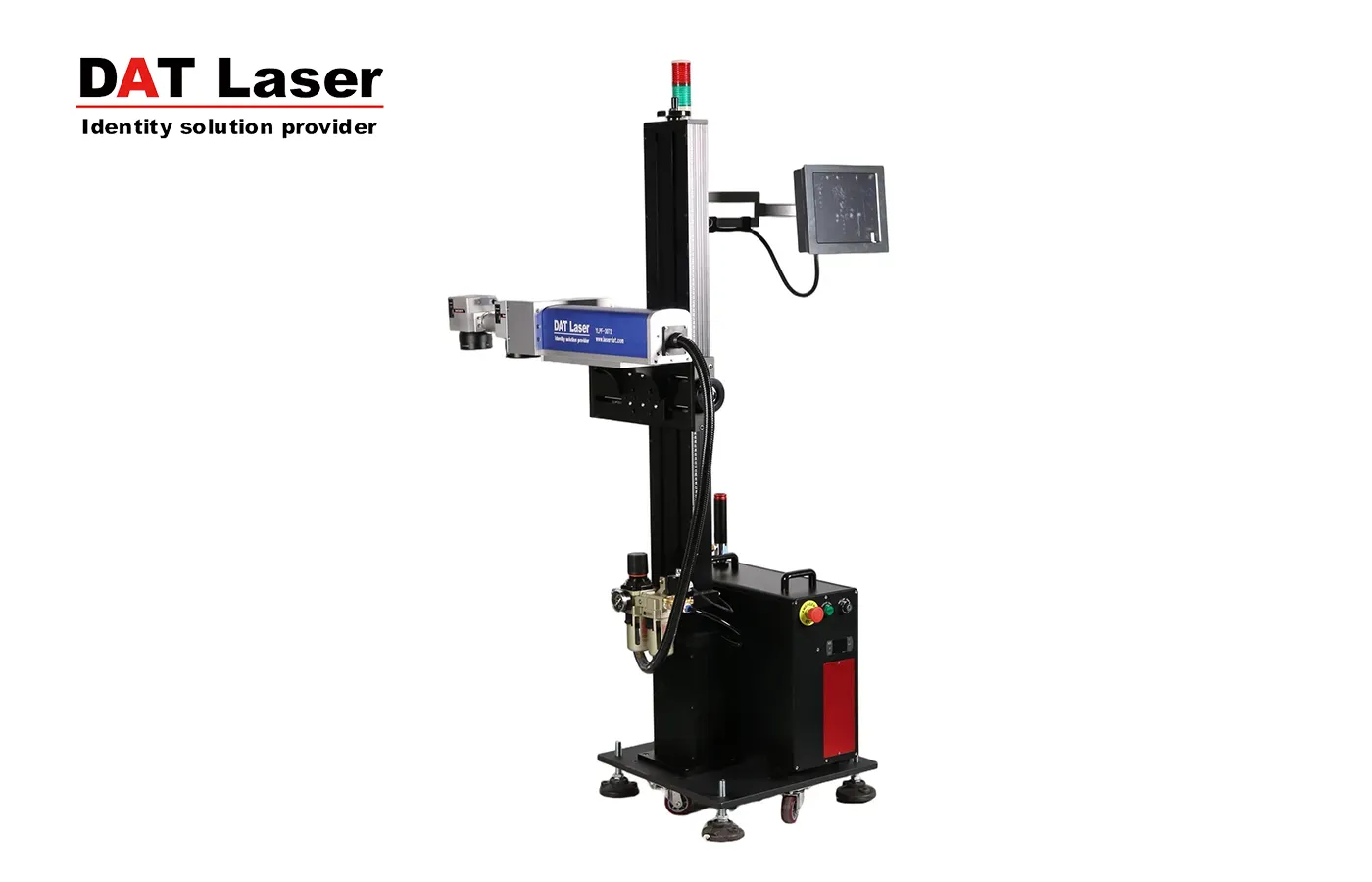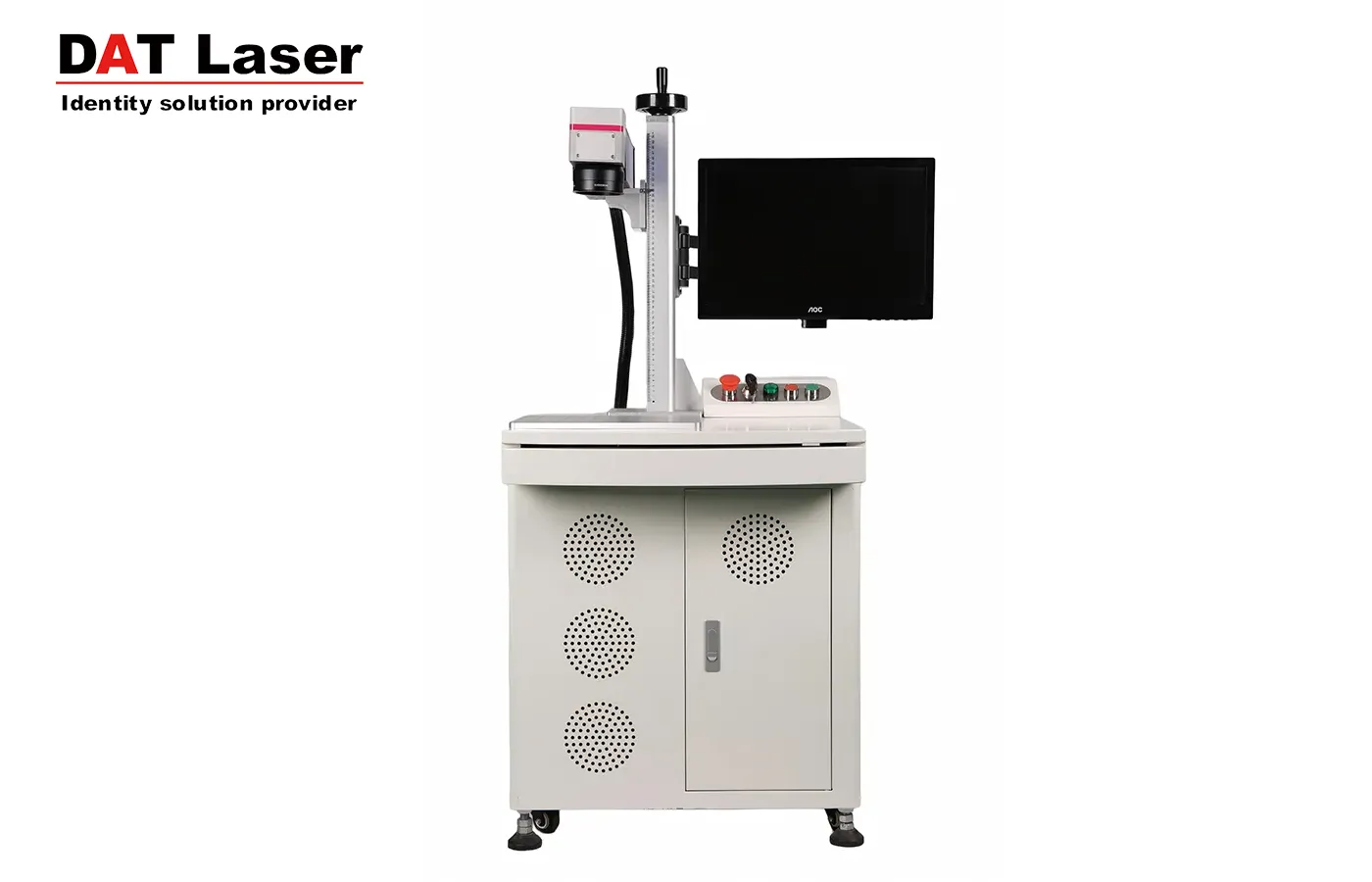
A UV Laser Marking Machine is a low-heat, high-precision laser system used to create permanent marks on sensitive metal and non-metal materials. For manufacturers of glass, ceramic, rubber and electronic components, the right marking method must do more than print a code. It must protect the product surface, support traceability, maintain appearance and fit into stable production.
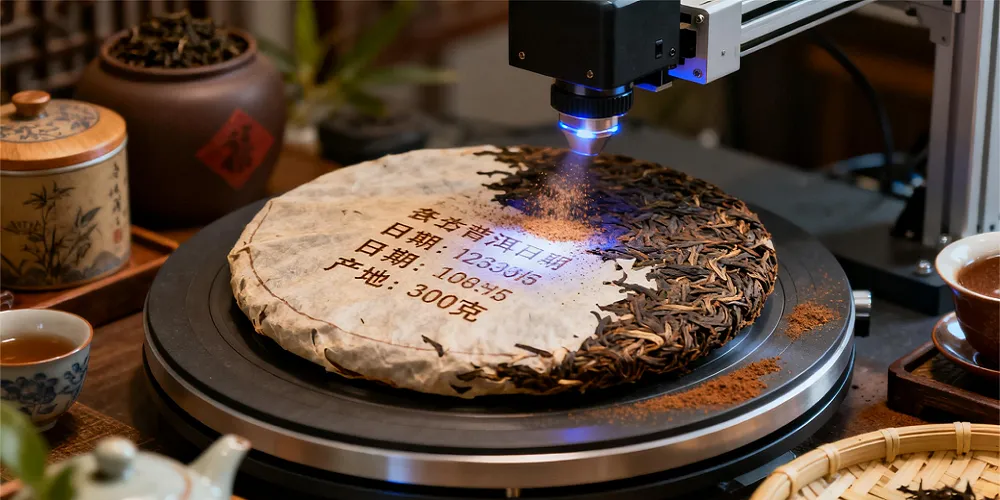
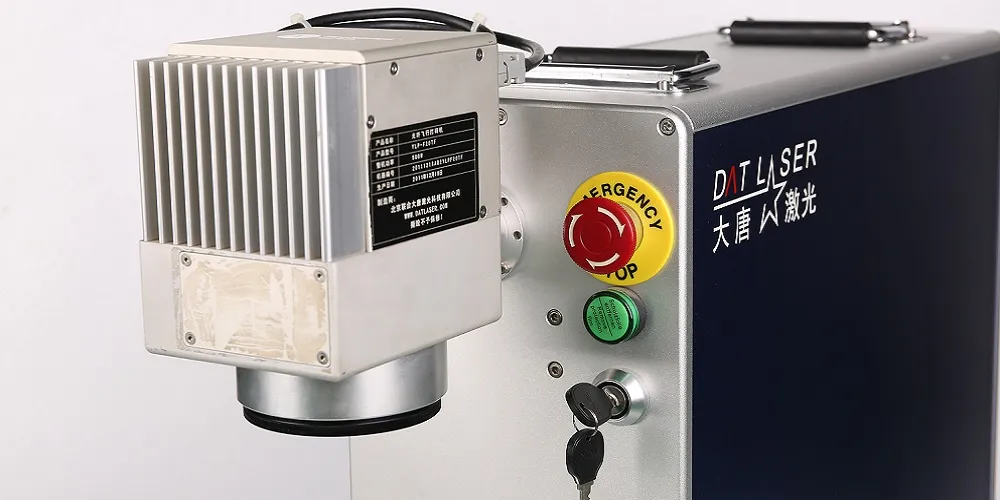
DAT Laser believes UV laser marking is not only about creating clear marks, but also about protecting the value of precision-made products. DAT Laser’s UV Laser Marking Machine is designed for ultra-fine laser processing, with applications in food, cosmetics, pharmaceuticals and polymer packaging surfaces. Its small focused spot and minimal heat-affected zone help reduce thermal effects and material charring risks.
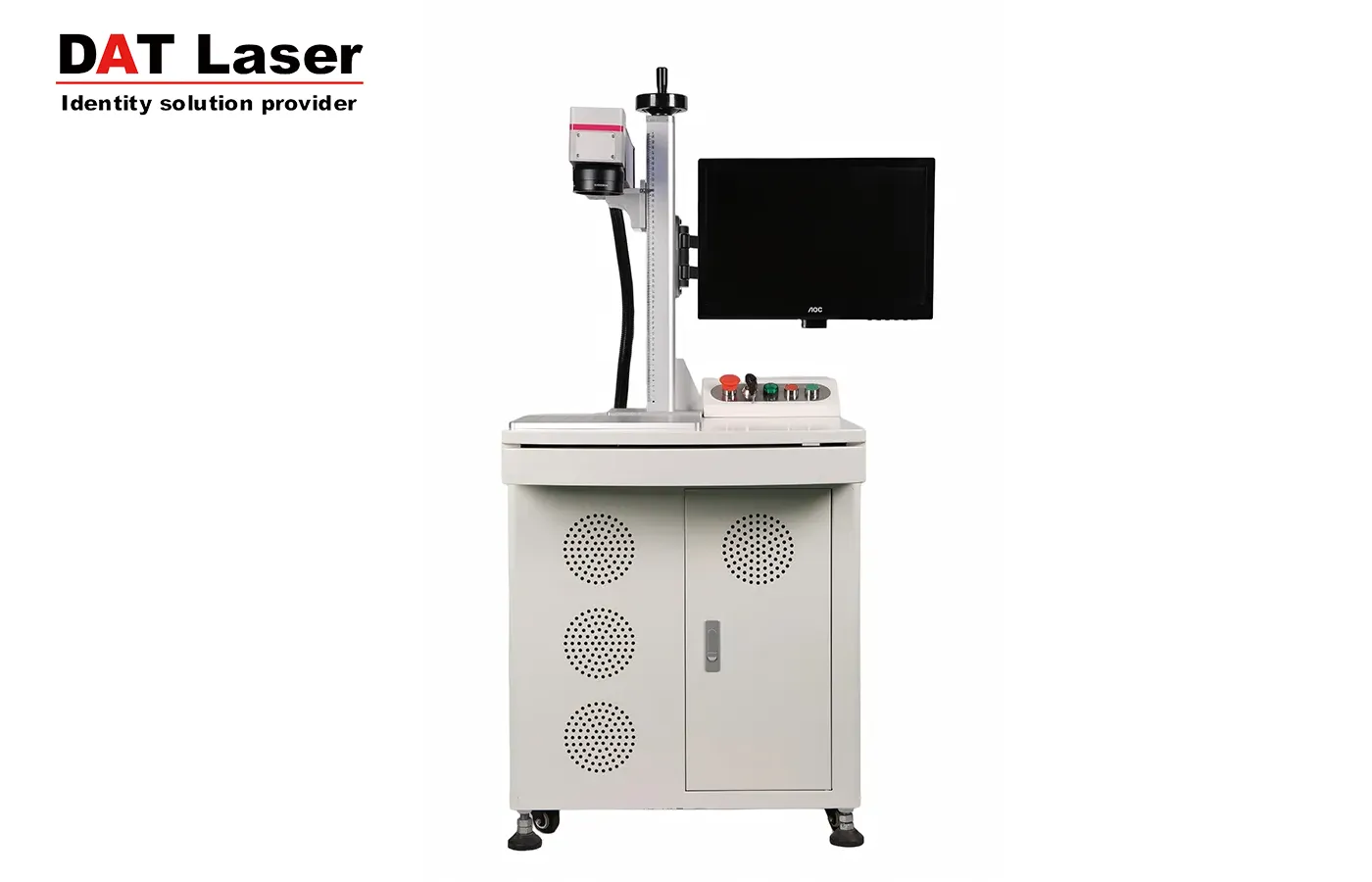
A UV Laser Marking Machine is a laser marking system that uses ultraviolet laser energy to produce fine, permanent identification with reduced heat influence.
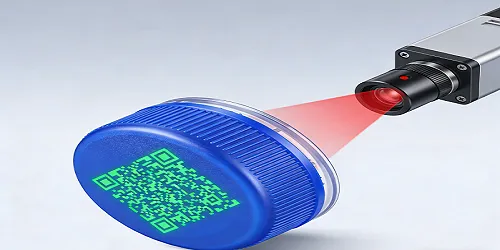
Compared with conventional marking methods, UV laser marking is suitable for delicate surfaces because it can create high-contrast text, logos, serial numbers, QR codes and batch codes without ink, labels or direct mechanical pressure. DAT Laser offers 3W, 5W and 10W UV Laser Marking Machine options, allowing buyers to match power selection with material sensitivity, marking speed and production requirements.
These materials are suitable for UV laser marking because they often require fine marks, low thermal impact and stable surface quality.
Glass products such as bottles, lenses and precision panels need clear marks without excessive cracking or surface damage. Ceramic components require durable codes on hard, smooth surfaces. Rubber parts need readable marks without burning, deformation or chemical ink transfer. Electronic components, including chips, connectors, sensors and PCB-related parts, often require compact codes for traceability in limited marking areas.
In modern manufacturing, traceability is becoming more important. GS1 states that its Global Traceability Standard helps organizations design and implement traceability systems based on GS1 standards, and GS1 standards are used globally by more than one million companies.
UV laser marking differs from inkjet printing, labels, mechanical engraving and fiber laser marking because it combines permanence, fine detail and low consumable use.
| Marking Method | Best-Fit Materials | Main Advantage | Buyer Concern |
|---|---|---|---|
| UV Laser Marking Machine | Glass, ceramic, rubber, plastics, electronics | Fine, permanent, low-heat marking | Higher initial equipment investment |
| Inkjet Printing | Packaging, date codes, cartons | Fast and flexible | Ink, solvent and maintenance costs |
| Labels | Retail packaging and logistics | Easy to apply | May peel, fade or be removed |
| Mechanical Engraving | Hard metal or rigid parts | Deep physical mark | May create stress or surface damage |
| Fiber Laser Marking | Metals and selected plastics | Strong metal marking performance | May create more heat on sensitive materials |
For buyers focused on long-term readability and stable quality, UV laser marking is often more suitable than consumable-based marking. DAT Laser also highlights that laser marking supports permanent, high-contrast and easy-to-read codes for traceability, anti-counterfeiting and personalized customization.
Buyers should evaluate a UV Laser Marking Machine by material compatibility, marking quality, operating stability, software usability, safety and supplier support.
Before purchasing, prepare real samples and test actual production content, such as logos, QR codes, barcodes, serial numbers and batch information. Key checks include contrast, line width, cycle time, focusing accuracy, fixture design, cooling method, software operation and operator training.
Laser safety should also be reviewed during equipment selection. Since industrial laser systems may pose risks to the eyes and skin without proper protection, buyers should consider safety enclosure design, operator training, warning labels and factory laser safety procedures.
For electronic component manufacturers, process consistency is especially important. IPC standards are widely used to support quality, reliability and consistency in electronics manufacturing, with more than 300 active IPC multilingual industry standards listed by the industry.
DAT Laser is suitable for buyers who need stable UV laser marking equipment, practical customization and support for precision manufacturing applications.
DAT Laser focuses on improving marking efficiency and accuracy through advanced control software and high-speed laser technology. Its equipment is also designed for flexible marking tasks on different materials, helping one device support multiple production needs while reducing equipment switching time and training difficulty.
For manufacturers of glass, ceramic, rubber and electronic components, DAT Laser can help evaluate material samples, select suitable UV laser power and design a practical marking solution for production use.
1. What materials can a UV Laser Marking Machine mark?
It can mark many metal and non-metal materials, including glass, ceramic, rubber, plastics and electronic components.
2. Why is UV laser marking suitable for glass?
It provides fine, low-heat marking, helping reduce the risk of burning, deformation or surface damage.
3. Is UV laser marking permanent?
Yes. Laser marking creates durable identification that can remain readable throughout the product’s service life.
4. Should I choose 3W, 5W or 10W?
3W is often suitable for fine and sensitive materials, while 5W and 10W may be selected for higher efficiency or stronger marking requirements.
5. Can UV laser marking replace inkjet printing?
In many precision applications, yes. It removes ink consumables and supports permanent, high-contrast marking.
6. Can DAT Laser provide customized solutions?
Yes. DAT Laser can support buyers with sample testing, power selection, fixture planning and marking solution customization.
A UV Laser Marking Machine is a practical choice for manufacturers that need clean, permanent and low-heat identification on glass, ceramic, rubber and electronic components. For precision manufacturing, DAT Laser helps buyers improve traceability, product appearance and production consistency through stable equipment, flexible application support and practical customization.